Spirit Animal Quiz: What Is My Spirit Animal?
A spirit animal quiz matches your answers to an animal whose habits look like yours. Ours asks 8 questions about the last few weeks, adds up points by a rule shown below, and gives one of 8 animals, each with a guide. It is a self-reflection game with animal images, not a prediction or a ceremony.
Take the quiz: 8 questions
Think about the last few weeks, not about who you would like to be. About two minutes. Your answers stay in your browser.
Example result (for one set of answers: 4, 4, 2, 3, 1, 4, 1, 3)
Deer. Gentle, and you notice everything.
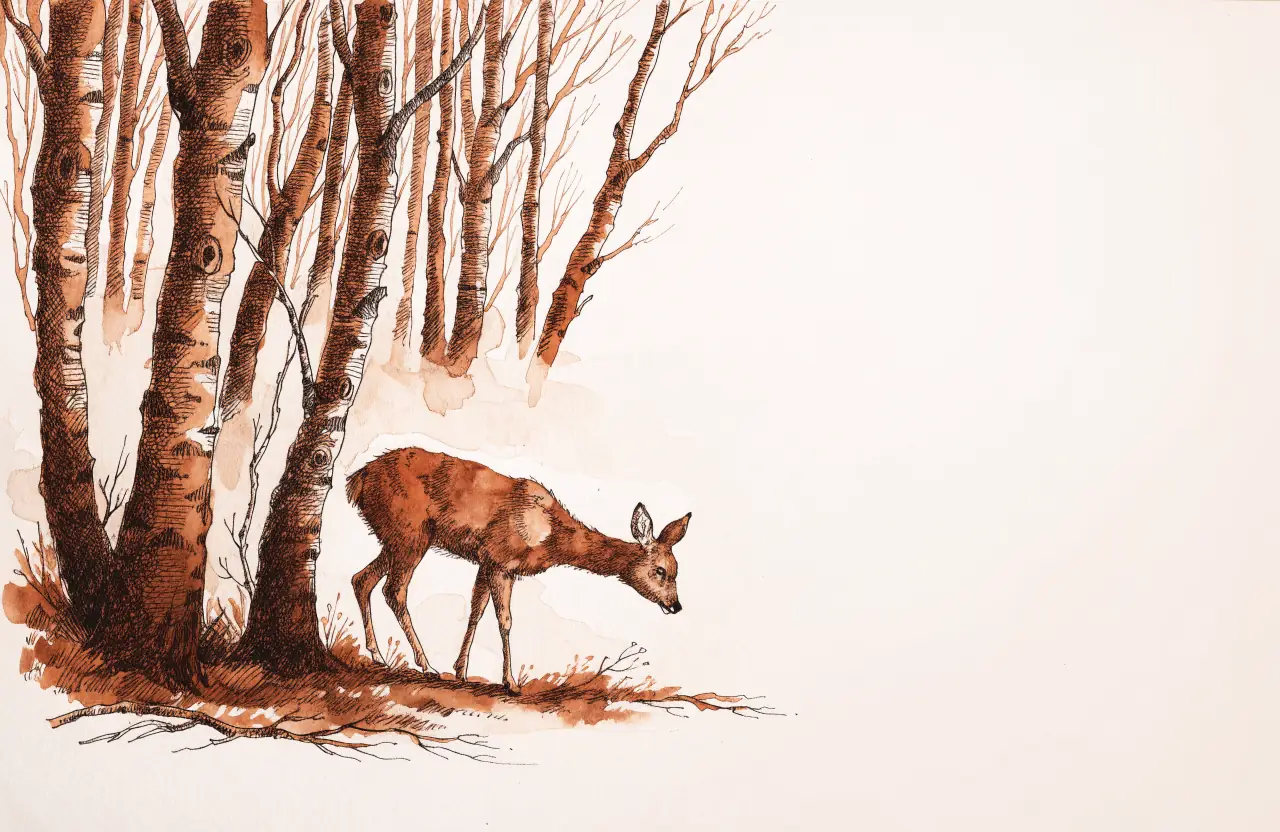
Why: answers that gave points to this animal
- Q1: “Went for a walk with no plan” +2
- Q2: “Sleep on it before I touch it” +1
- Q3: “I listen far more than I talk” +1
- Q4: “notices who is uncomfortable” +2
- Q5: “Noise and crowds” +2
- Q6: “Asked where it would leave me in a year” +1
- Q7: “Water, play, something silly” +1
- Q8: “Gentle, but you notice everything.” +2
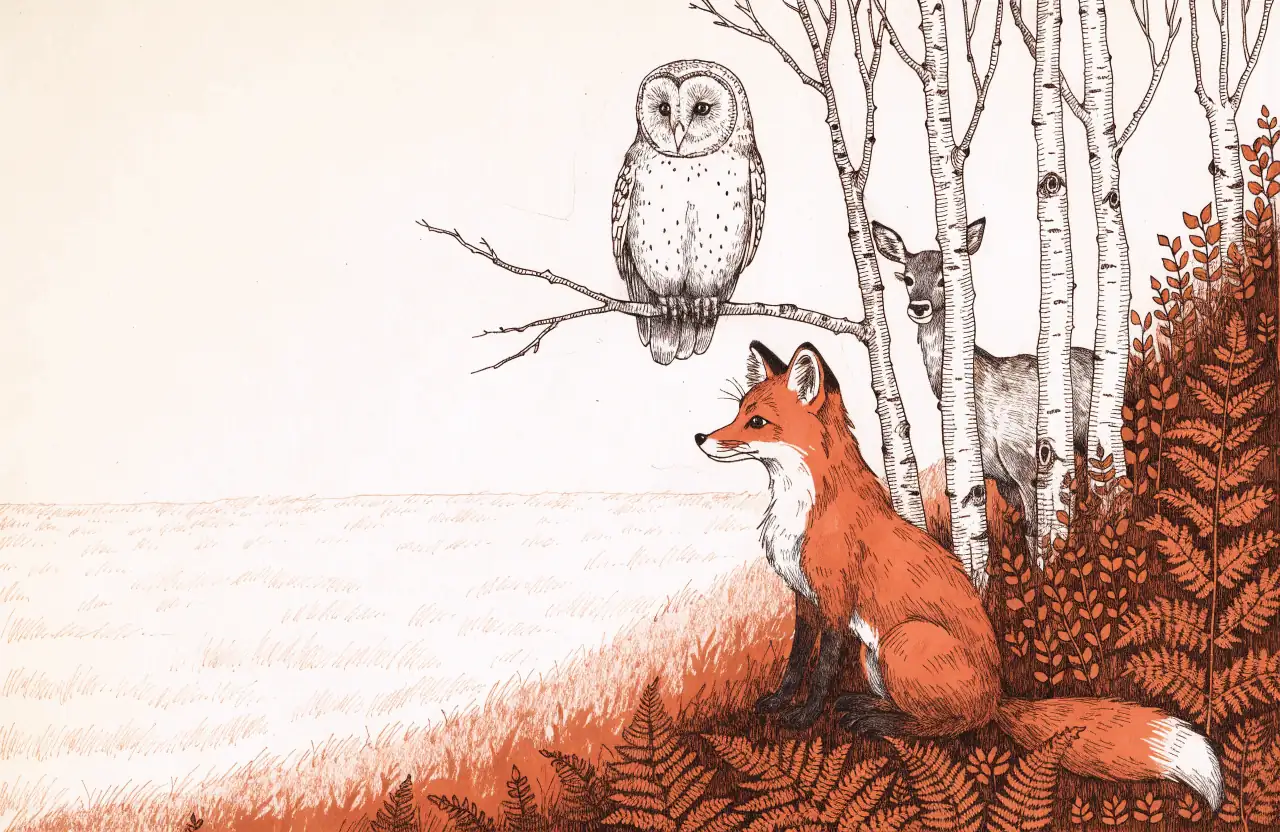
Runner-up: Owl (4 points). If it fits you better, read both.
How the quiz works (and what it counts)
Each of the 8 questions has 4 answers. Every answer gives 2 points to one animal and 1 point to another, because most real habits fit more than one image: “sleep on it before I touch it” is mostly bear and a little deer. The animal with the most points wins. If two animals are level, the one with more 2-point answers wins; if they are still level, you see both.
We built the questions so that no animal is favored. At build time this page checks every possible set of answers, all 65,536 of them. Each animal wins in 9.9% to 10.6% of them, and 17.1% end in an exact tie. So if you get the wolf, your answers put it there.
| Animal | 2-point answers | 1-point answers | Wins, of 65,536 answer sets |
|---|---|---|---|
| Wolf | 4 | 4 | 6,820 (10.4%) |
| Bear | 4 | 4 | 6,896 (10.5%) |
| Fox | 4 | 4 | 6,922 (10.6%) |
| Owl | 4 | 4 | 6,856 (10.5%) |
| Crow | 4 | 4 | 6,930 (10.6%) |
| Deer | 4 | 4 | 6,973 (10.6%) |
| Otter | 4 | 4 | 6,464 (9.9%) |
| Eagle | 4 | 4 | 6,469 (9.9%) |
What the quiz does not do: it doesn’t read your birthday, your energy or your past lives, and nobody sees your answers. The questions ask what you did, because people tend to describe the person they want to be.
What is a spirit animal?
In everyday English, a spirit animal is an animal a person feels they share character with and turns to as an image or guide. Behind the phrase are several older ideas that are easy to mix up:
- Totem: an animal or natural object that stands for a clan and its kinship. The word comes from Ojibwe (in Britannica’s rendering, ototeman, “one’s brother-sister kin”).
- Guardian spirit: a personal protector, often in animal form, sought through a vision. The anthropologist Ruth Benedict described it across North American peoples in 1923.
- Power animal: the term popularized by Michael Harner’s 1980 book The Way of the Shaman, which taught a Westernized “core shamanism”.
- Spirit animal as slang: “pizza is my spirit animal”. The Atlantic traced this joke usage to the late 2000s and its spread through Tumblr around 2010.
This quiz belongs to none of these traditions. It borrows the image the way a fable does, as a prompt to look at your own habits.
The eight animals in this quiz
We kept the list short so that every result gets a real guide instead of three adjectives. Each guide has one thing the actual animal does, with a source, what spirit-animal sites usually say about it, one question to ask yourself and one small thing to try.
Wolf
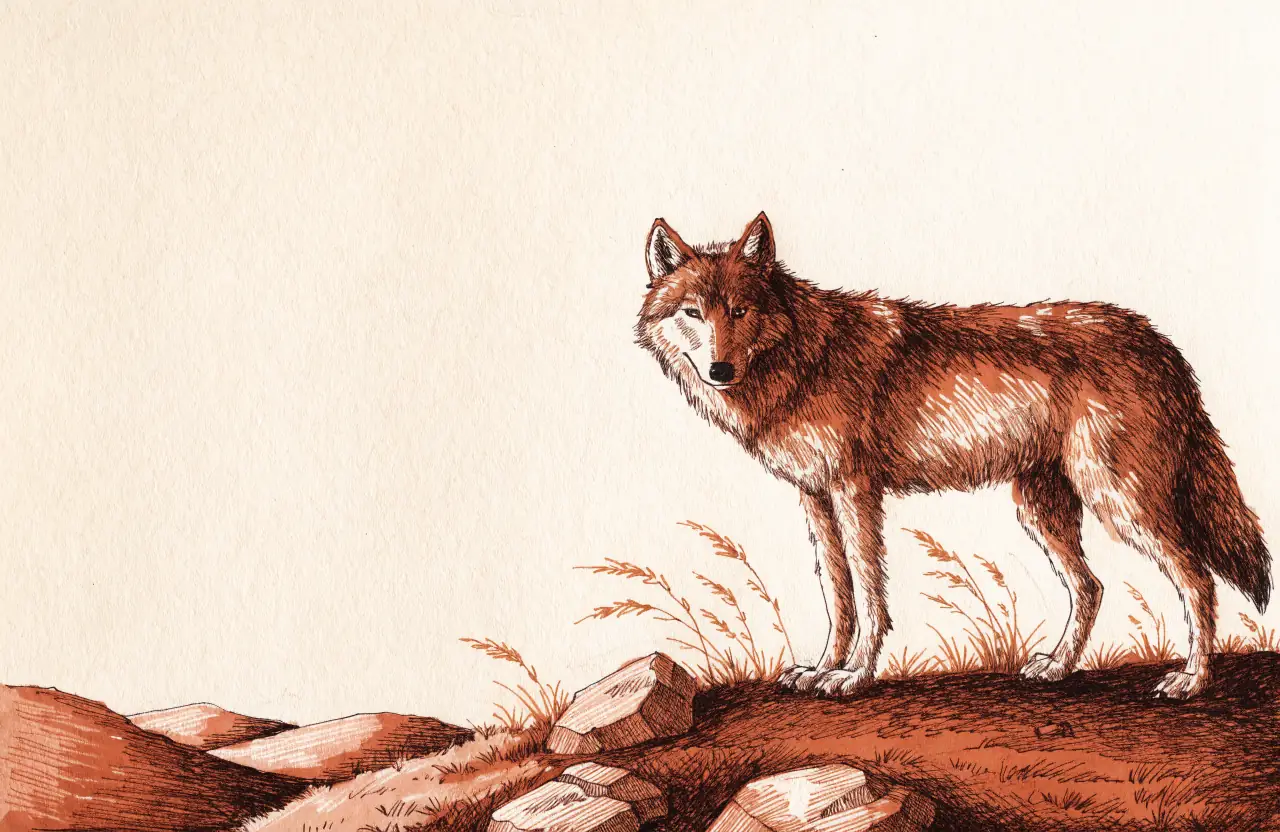
You keep the group together.
- What the real animal does
- Wolves live in packs. In Yellowstone, where they were brought back in 1995–1997, the adults of a pack share the care of pups, hunt large prey together and defend their kills as a group (National Park Service).
- What spirit-animal sites say
- Typical keywords: loyalty, instinct (spiritanimalquizzes.com). These readings are modern, and the sites give no traditional source for them.
- A question for you
- Who is your pack right now, and who in it carries more than their share? Sometimes the answer is you.
- Try this
- Once this week, catch yourself adjusting to the group without thinking: agreeing, smoothing things over, filling a silence. Don’t change it. Just say to yourself, “I’m doing it now.”
Bear
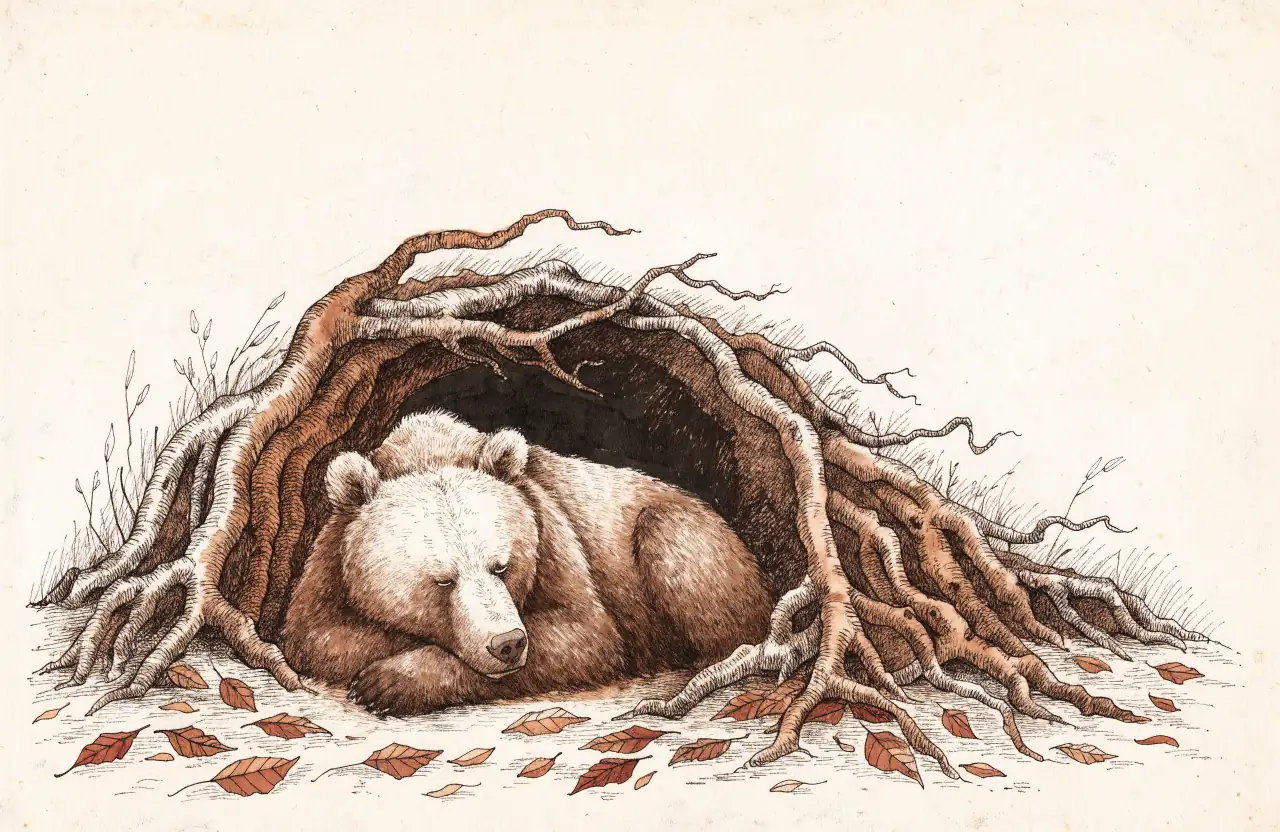
You know when to go quiet and rebuild.
- What the real animal does
- A black bear in its winter den can go months without eating or drinking. Its heart slows from about 45 beats a minute to about 8, and it lives on the fat it stored in the fall (National Park Service).
- What spirit-animal sites say
- Typical keywords: strength, introspection (spiritanimalquizzes.com). These readings are modern, and the sites give no traditional source for them.
- A question for you
- What could you put on hold for a season, if you trusted it would keep?
- Try this
- Tonight, before sleep, spend two minutes feeling the weight of your body on the bed, heels first, then up to the head. Nothing to fix, only weight.
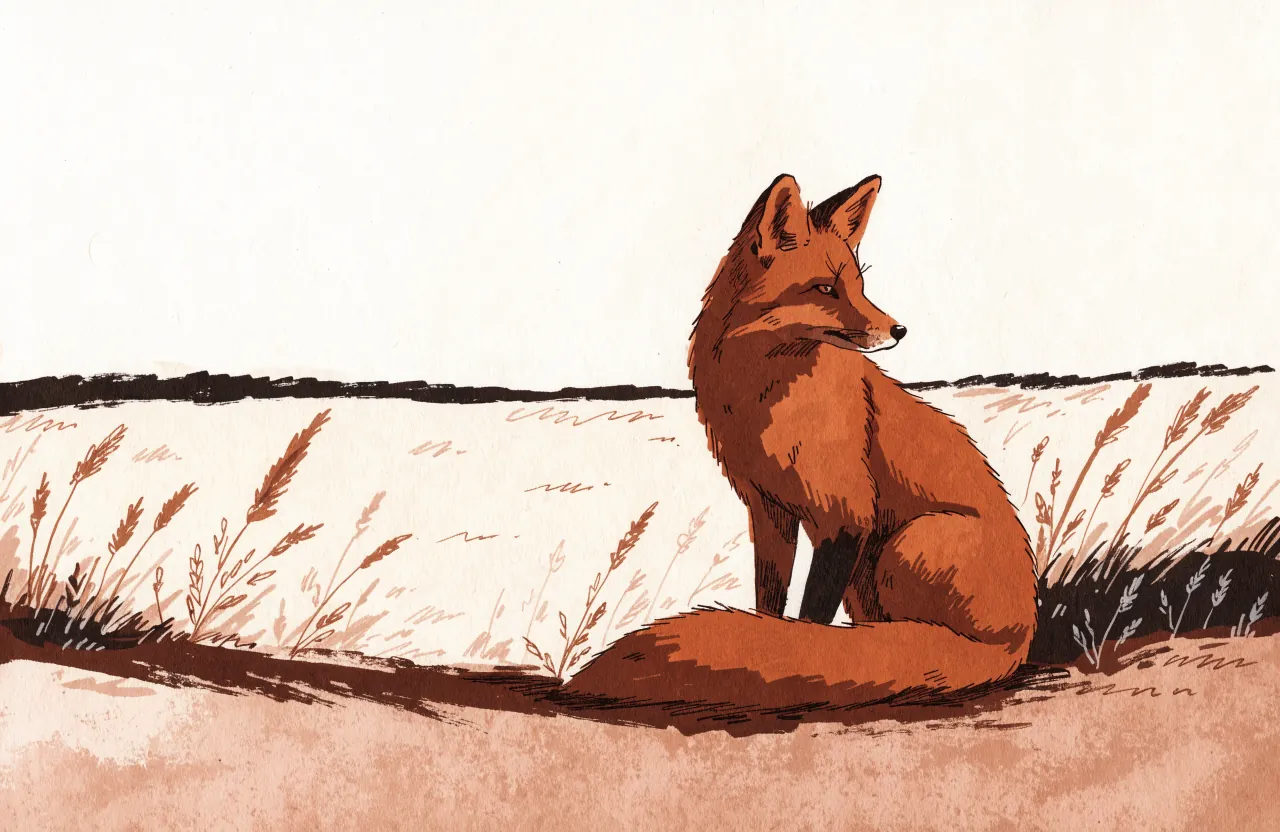
Fox
You find the way around.
- What the real animal does
- A red fox hunting mice under snow listens first, then leaps. In a Czech study of 592 jumps by 84 foxes, jumps toward the north-east succeeded much more often than jumps in most other directions; the authors suggest foxes may use the Earth’s magnetic field to judge distance, which is still a hypothesis (Červený et al., Biology Letters, 2011).
- What spirit-animal sites say
- Typical keywords: cunning, adaptability (spiritanimalquizzes.com). These readings are modern, and the sites give no traditional source for them.
- A question for you
- Where are you listening before you leap, and where are you leaping before you’ve heard enough?
- Try this
- The next time you’re about to answer fast, take one breath first and notice what you hear during it.
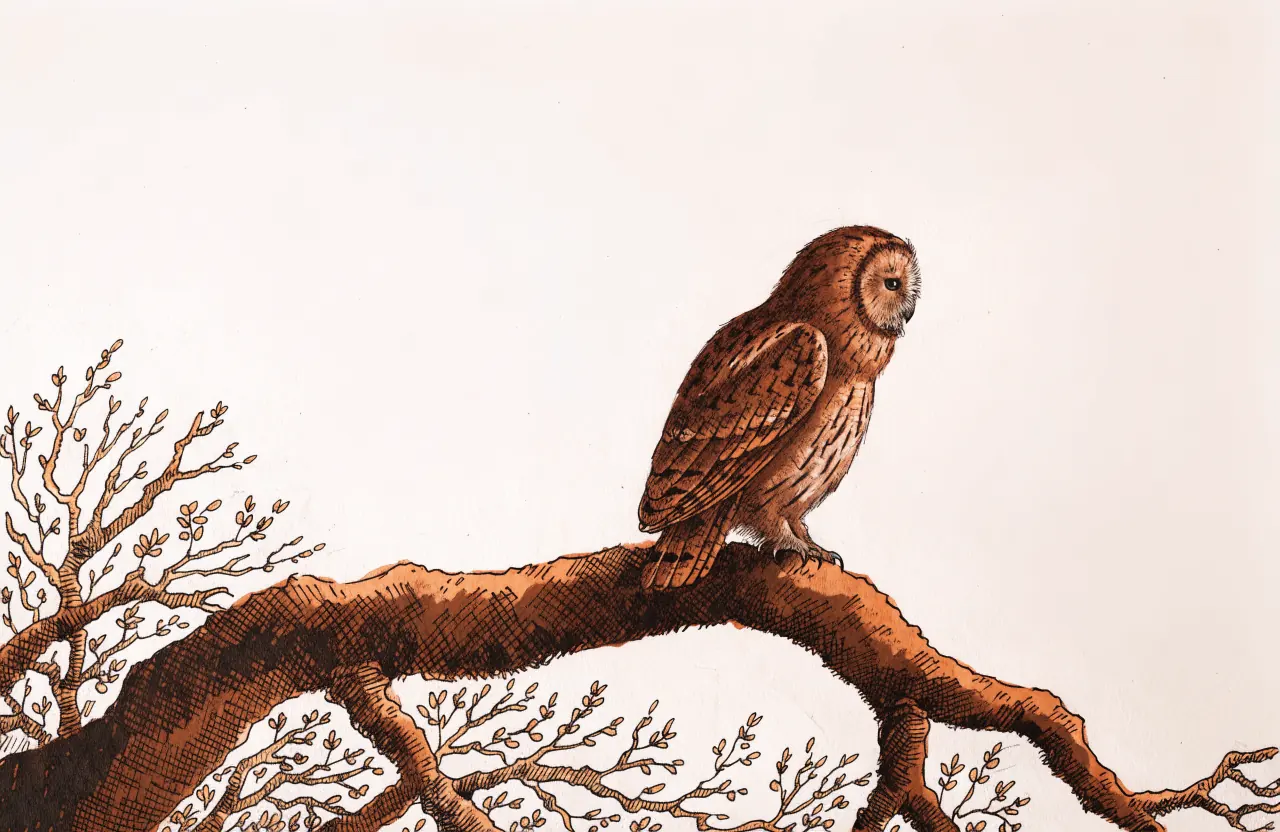
Owl
You hear what others miss.
- What the real animal does
- Barn owls can catch mice in complete darkness. The Cornell Lab of Ornithology notes that their ability to find prey by sound alone is the best of any animal ever tested.
- What spirit-animal sites say
- Typical keywords: wisdom, insight (spiritanimalquizzes.com). These readings are modern, and the sites give no traditional source for them.
- A question for you
- What have you heard lately, in someone’s voice or your own, that you haven’t said out loud?
- Try this
- Close your eyes for one minute and count the separate sounds around you: the fridge, a car, your breath. Count them; don’t judge them.
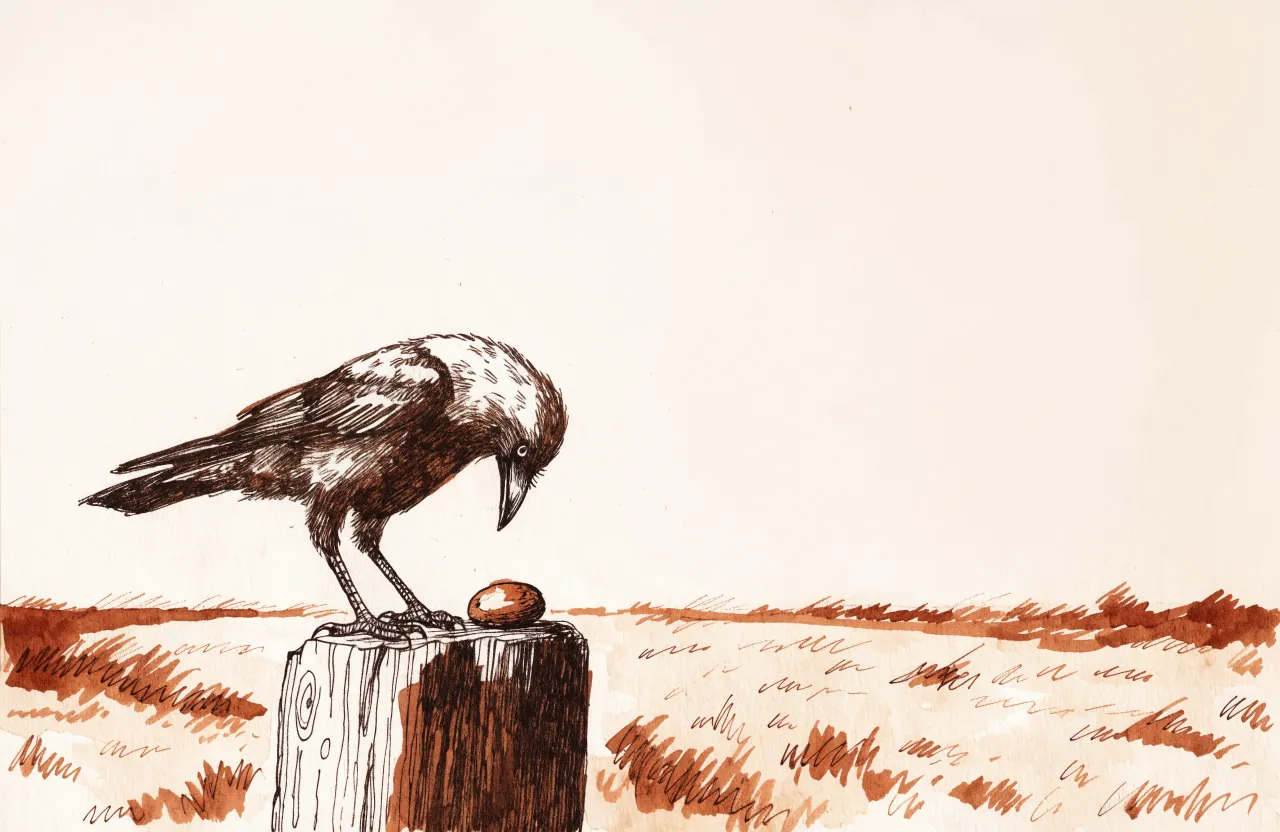
Crow
You remember, and you say it.
- What the real animal does
- Wild American crows remember human faces. Near Seattle, crows kept scolding a mask worn by the people who had trapped them for at least 2.7 years, and most of the scolding birds had never been trapped themselves (Marzluff et al., Animal Behaviour, 2010).
- What spirit-animal sites say
- Typical keywords: magic, intelligence (spiritanimalquizzes.com). These readings are modern, and the sites give no traditional source for them.
- A question for you
- Which old grudge are you still guarding, and does it still protect you?
- Try this
- Today, notice one face or name you react to before you’ve had a thought. Just register where the reaction lands: jaw, shoulders, stomach.
Deer
Gentle, and you notice everything.
- What the real animal does
- A white-tailed doe leaves her newborn fawn alone for hours. The fawn has little scent and lies still in tall grass; the doe keeps away so her own scent won’t lead predators to it, and comes back a few times a day to nurse (New Hampshire Fish and Game).
- What spirit-animal sites say
- Typical keywords: gentleness, vigilance (spiritanimalquizzes.com). These readings are modern, and the sites give no traditional source for them.
- A question for you
- Where does staying quiet keep you safe, and where does it keep you hidden?
- Try this
- In a loud or crowded place, find three things that are not moving: a wall, a tree, your feet on the floor. Rest your eyes on each for one breath.
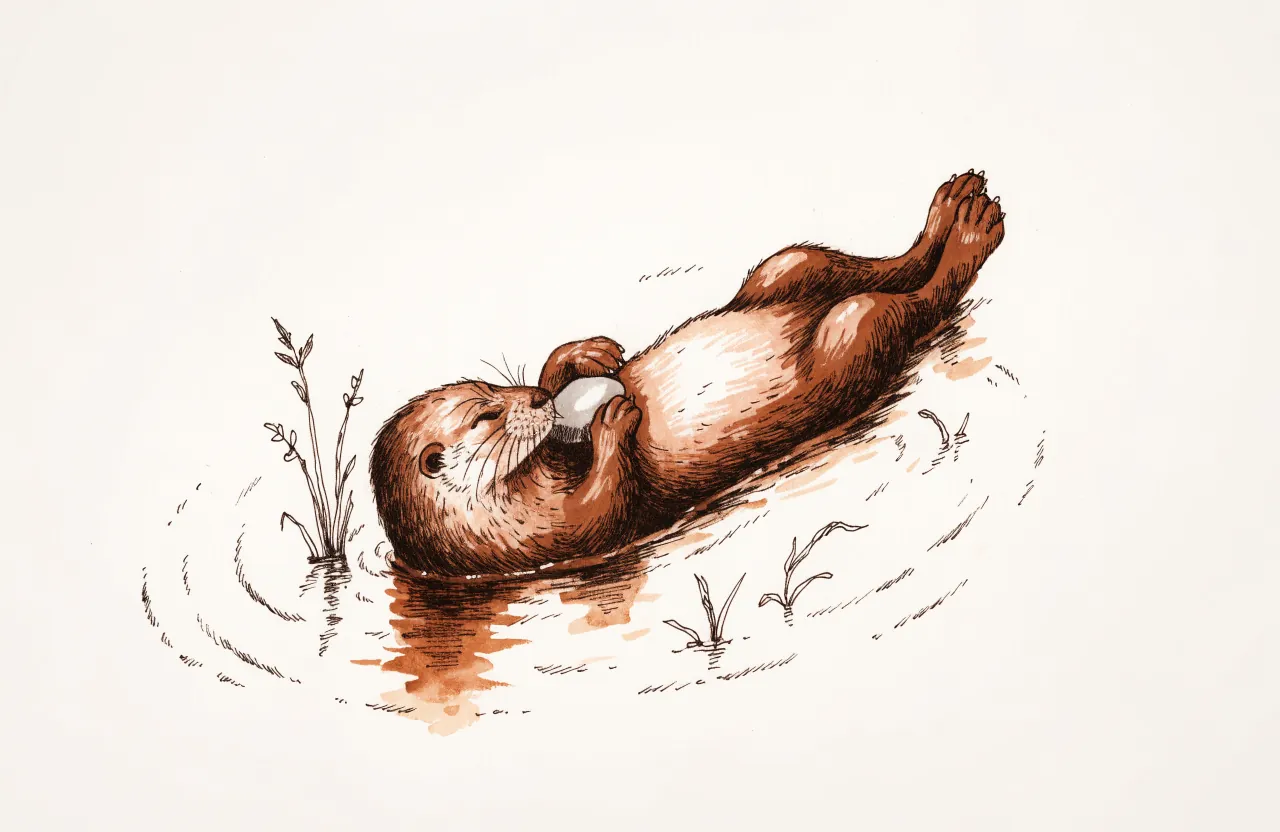
Otter
You make hard days lighter.
- What the real animal does
- Sea otters have no blubber. They stay warm with dense fur and a fast metabolism, and an adult has to eat 20–30% of its body weight every day just to keep going (U.S. Fish and Wildlife Service).
- What spirit-animal sites say
- Typical keywords: play, community (calmoura.com). These readings are modern, and the sites give no traditional source for them.
- A question for you
- What keeps you warm when life turns cold: which people, which small pleasures? Are you getting enough of them?
- Try this
- Do one ordinary thing today slowly, as if it were a game: rinsing a cup, climbing the stairs. Notice the temperature of the water, the feel of each step.
Eagle
You look for the long view.
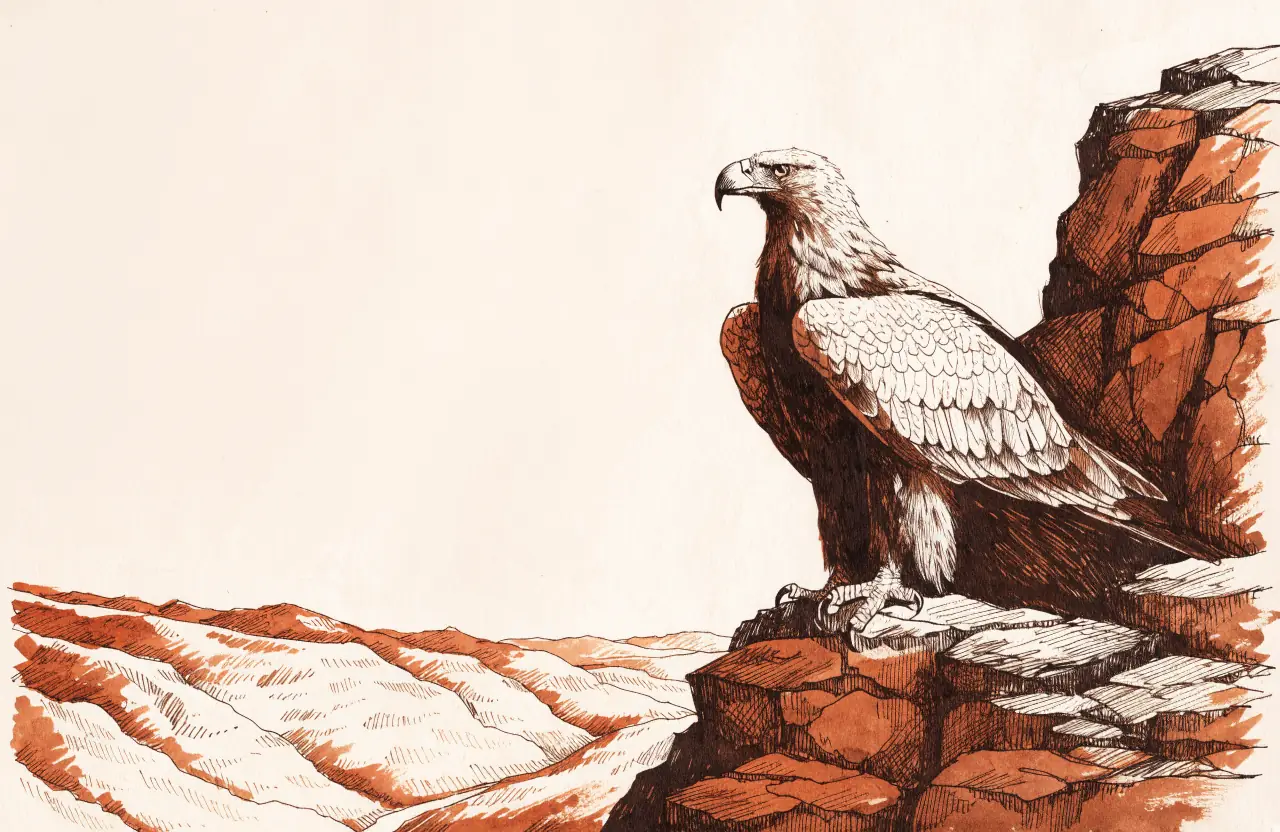
- What the real animal does
- The bald eagle has been the U.S. national emblem since 1782 and a spiritual symbol for Native peoples far longer, the Cornell Lab of Ornithology notes. Real eagles are less lofty than the emblem: they will chase other birds to take their food.
- What spirit-animal sites say
- Typical keywords: foresight (spiritanimalquizzes.com). These readings are modern, and the sites give no traditional source for them.
- A question for you
- Is your long view helping you choose, or helping you skip today?
- Try this
- Look out the farthest window you can find for one minute. Then look at your own hands for one minute. Notice which is harder.
How do you know what your spirit animal is?
A quiz can’t tell you in the traditional sense. In the cultures the idea comes from, an animal relationship is inherited through a clan, given in a naming ceremony, or met in a vision, and it is guided by elders. Renee Gokey of the Eastern Shawnee Tribe of Oklahoma, who works at the Smithsonian’s National Museum of the American Indian, told Discover that an elder may give a baby a name tied to an animal clan, sometimes based on a dream; her own name came when she was about 25.
If you’re asking in the everyday sense, “which animal feels like me?”, these are the ways people usually go about it, and you can try any of them without borrowing anyone’s ceremony:
- Notice which animal keeps turning up in your dreams, your doodles, the stories you remember from childhood.
- Watch a real animal for ten minutes: a crow on a lamp post, a neighbor’s dog. What do you envy in it? What irritates you?
- Ask a friend which animal you remind them of. Their answer is often less flattering and more useful than your own.
- Take the quiz above and read the runner-up too. If the runner-up fits better, trust that.
Spirit animal vs totem animal vs power animal
A spirit animal and a totem animal are not the same, although sites use them as synonyms. A totem belongs to a group and comes through family. A spirit animal, in modern use, is personal and found by the person. A power animal is a term from one specific modern teaching.
| Totem | Guardian spirit | Power animal | Spirit animal (today) | |
|---|---|---|---|---|
| Whose | A clan or lineage | One person | One person | One person |
| How you get it | Inherited | A vision, often after isolation and purification | A guided “shamanic journey” | Self-chosen, a quiz, a dream |
| Where the word comes from | Ojibwe, recorded in English by John Long in 1791 | Anthropology, Ruth Benedict 1923 | Michael Harner, 1980 | New Age books, then internet slang |
| Rules | Often marriage and hunting taboos | Specific to each nation | Set by the teacher | None |
The confusion goes back to the word’s first use in English. Britannica notes that the trader who brought “totem” into English in 1791 gave it a false meaning, believing it named an individual’s guardian spirit, while for the Ojibwe it meant clan kinship.
Spirit animal by birthday and zodiac sign
There is no single answer, and the charts disagree. The most widely copied chart, often called the “Native American zodiac”, goes back to a 1980 book, The Medicine Wheel: Earth Astrology by Sun Bear and Wabun; its catalogue description says the authors “put forth a whole new system of earth astrology”. It gives, for example, the deer for May 21 to June 20. Other sites give different animals for the same dates: spiritanimalquizzes.com lists the fox for Gemini.
So if you searched “what is the spirit animal for Gemini”, the answer depends on which modern chart you read, and none of them is an ancient tradition. If you only need the ordinary sign for your birthday, here are the Western zodiac sign dates by year. Chinese zodiac animals are a separate, real calendar system; they describe birth years, not spirit guides. If you want an animal that says something about you, the quiz above asks about you rather than your date.
Is it okay to say “spirit animal”?
Many Native people find the casual use hurtful, and Merriam-Webster’s usage note calls the joke meaning, as in “tacos are my spirit animal”, “often offensive”. The concern is the trivializing of real traditions and the stereotyped images that come with it. Pinny Lavalier, a Sicangu Lakota volunteer with Native Languages of the Americas, told Discover that such memes “almost always go along with stereotypes about Indians”.
Views differ, though. In the same article, Laura Redish of Native Languages of the Americas points out that the pop-culture phrase has little to do with real beliefs, and that it might never have been seen as appropriation if New Age spirituality hadn’t marketed it as something “learned from Native American wisdom”. Our approach on this page follows from that: we use the phrase because it is what people search for, we don’t dress it in Native imagery or claim it is a Native practice, and we say plainly where each idea comes from. If you prefer, call your result an animal guide or a kindred animal; the quiz works the same.
Frequently asked questions
Is the spirit animal quiz accurate?
No quiz can find a spirit animal in the traditional sense; in the cultures the idea comes from, that happens through a vision, a ceremony or a family line. The quiz is accurate in a narrower way: it adds up your answers by a published rule, and every one of the 8 results comes up in roughly the same share of all possible answer sets (9.9% to 10.6%).
Can my spirit animal change?
In this quiz, yes: it reflects the last few weeks, so a hard month and a calm one can give different animals. Modern spirit-animal sites also say that animals come and go in different periods of life. In clan traditions it is different: a clan animal is inherited and does not change.
Does everyone have a spirit animal?
Not in any tradition we know of. A clan animal belongs to members of particular clans in particular nations, and a guardian spirit was sought through a vision quest, which not everyone went through. The idea that everyone has one spread later, with New Age books and online quizzes.
What is the most common spirit animal?
There is no count across people, and any site that gives one is guessing. In our quiz no animal is “most common” by design: over all 65,536 possible answer sets, each one wins between 9.9% and 10.6% of the time, and 17.1% end in a tie.
How are spirit animals chosen?
In the traditions behind the idea, people did not choose them. A clan animal comes with your family; a guardian spirit appeared in a vision, as Ruth Benedict described in 1923. In this quiz, the animal is chosen by your answers and a simple point count you can check.
What animal would I be?
Take the 8 questions above. The result shows which answers gave the points, and the runner-up animal, so you can judge for yourself which description fits.
Can a spirit animal be a person?
Only in the internet joke sense (“Beyoncé is my spirit animal”). Merriam-Webster lists that meaning as “often offensive”. The objection is that it turns a sacred idea from several Indigenous cultures into slang.
Sources (17)
- Totemism
- J. Long. Voyages and Travels of an Indian Interpreter and Trader
- R. Benedict. The Concept of the Guardian Spirit in North America (PhD thesis, Columbia University)
- M. Harner. The Way of the Shaman: A Guide to Power and Healing
- Sun Bear, Wabun. The Medicine Wheel: Earth Astrology (catalogue record)
- Spirit animal (definition and usage note)
- Your Spirit Animal: An Investigation
- The Term “Spirit Animal” Means More Than Your Favorite Animal
- Honoring Animal Relatives (Native Knowledge 360°)
- Wolf Ecology, Yellowstone National Park
- Species Spotlight: Black Bear
- J. Červený et al. Directional preference may enhance hunting accuracy in foraging foxes. Biology Letters 7(3)
- American Barn Owl: overview
- J. M. Marzluff et al. Lasting recognition of threatening people by wild American crows. Animal Behaviour 79(3)
- Leave Baby Deer Alone
- Southern Sea Otter
- Bald Eagle: overview