What Is Shadow Work?
Shadow work is the practice of noticing the parts of yourself you push away, the traits you deny, envy or hide, and owning them instead of blaming others. The idea of the shadow is Carl Jung’s; the name “shadow work” came later. Done alone, it is a reflection practice and does not replace therapy.
Shadow or not? A one-minute check
Think of one recent reaction to a person: irritation, envy, contempt, admiration. Answer about that one reaction. This is not a personality test, and nothing you choose is saved.
Example (“A colleague who always speaks first in meetings, and I find her pushy.” Answers: Yes, Yes, Not sure; real harm: No)
5 of 6. This looks like typical shadow material: a reaction that says something about you as well as about them. That is useful, not shameful. The prompts linked below start exactly here.
- Bigger than the event: Yes. Jung saw an outsized emotion as a marker: it shows up where we are least adapted. (Aion §15)
- Your own version: Yes. Seeing in someone else a trait you don’t admit in yourself is what Jung called projection. It can be a flaw or a gift. (Aion §16–17, §423)
- A word you would hate: Not sure. Jung’s shortest definition of the shadow is “the thing a person has no wish to be”. (CW 16 §470)
The shadow in plain words
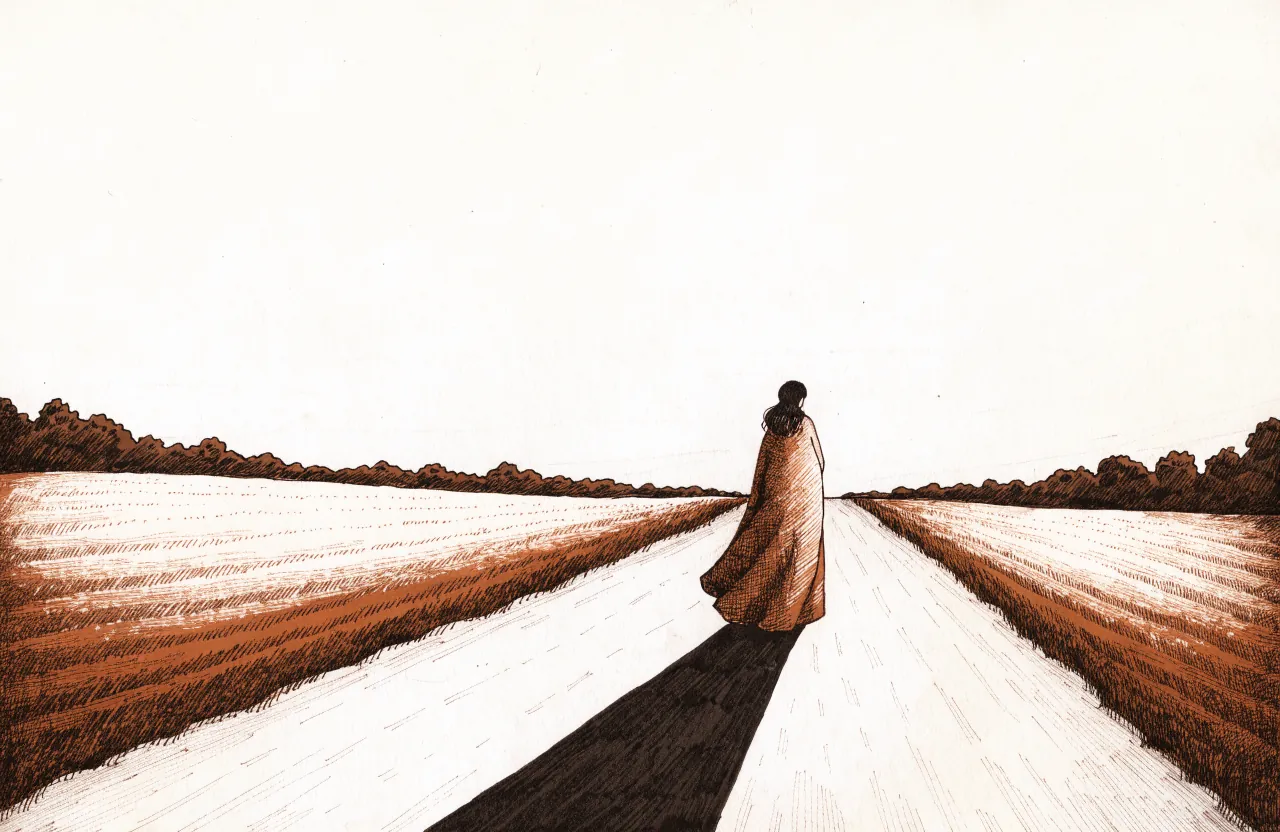
Your shadow is everything about you that you decided, mostly as a child, was not okay to be. A kid who gets scolded for being loud learns to be quiet, and the loudness doesn’t vanish. It goes out of sight. Years later it might show up as a sharp dislike of loud people, or as a burst of temper that surprises you.
Two things about the shadow surprise most people. First, it is not your “evil side”. It holds whatever your family, school or culture frowned on, and that can be anger and selfishness but also ambition, sexuality, sadness or need. Second, it holds good things. In Aion Jung lists among its contents “realistic insights” and “creative impulses” (§423). People call this the golden shadow.
The poet Robert Bly gave the most quoted picture of it: a long, invisible bag we drag behind us, which we spend the first twenty years of life filling. Shadow work is taking things out of that bag and looking at them.
Where the idea comes from
Carl Jung, the Swiss founder of analytical psychology, used “the shadow” for the part of the personality we don’t recognize as ours. In one late volume he sums it up as “the thing a person has no wish to be” (Collected Works, vol. 16, §470). He also saw it as a moral task, not a curiosity: “no one can become conscious of the shadow without considerable moral effort” (Aion, §14).
Many articles credit Jung with “shadow work”, but the phrase is not his. Connie Zweig says she and Jeremiah Abrams came up with it in the 1980s, during their work on the anthology Meeting the Shadow (1991). Zweig describes shadow-work as “the continuing effort” to build a conscious relationship with that blind spot. What Jung wrote about projection, archetypes and the long road he called individuation is a subject of its own, and we cover it on the Jung page.
How the shadow shows up
You can’t look at your shadow directly; that is what makes it a shadow. You see it by its effects. These are the common ones:
- Overreaction. A small thing makes you furious, jealous or ashamed out of proportion. Jung noted that such affects “occur usually where adaptation is weakest” (Aion, §15).
- Projection. You are sure a trait belongs to someone else, and you can’t stand it in them. Jung was gloomy about spotting it alone: “there is little hope that the subject will perceive this himself” (§16).
- “I would never.” A trait you insist you don’t have at all, sometimes said a little too loudly.
- Strong admiration. You put someone on a pedestal for a quality you think you could never have. This is the golden shadow, seen from outside.
- Slips. A remark or a deed that makes you say afterward, “that wasn’t me.”
- Dreams. Jung wrote that the shadow “is always of the same sex as the subject” (§19), so Jungians watch for a dream figure of your own sex whom you dislike or fear.
None of these proves anything by itself. Sometimes a person really is rude, and your anger is just right. The check at the top of this page asks about that on purpose.
How shadow work actually works
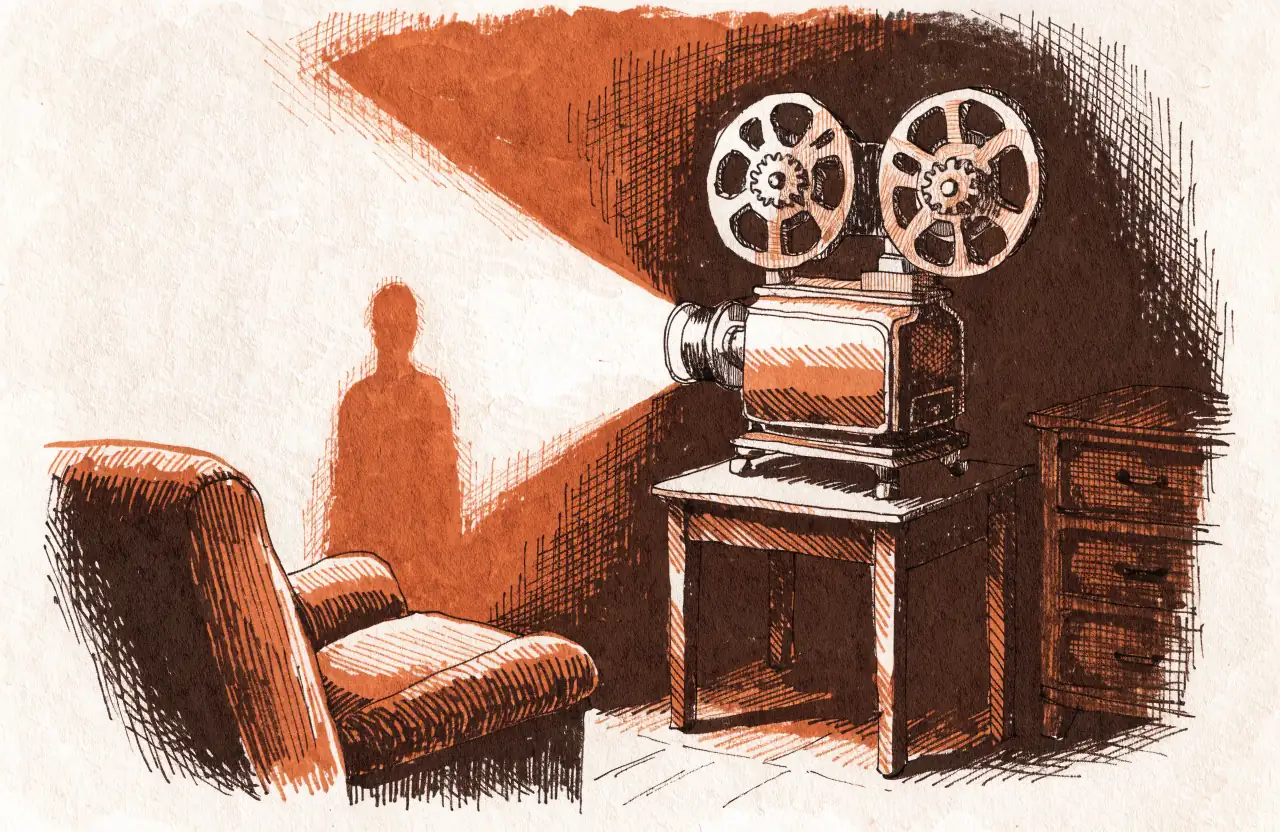
Shadow work is mostly a habit of noticing. Whatever form it takes, it runs through the same four moves:
- Notice the reaction while it happens, or soon after: “I am way too angry about this.”
- Pause and name it without acting on it: irritation, envy, contempt, longing.
- Look for your own version. Where do you do the same thing, or wish you could? What were you told about it as a kid?
- Take one small conscious step. Allow yourself a little of what you exiled, or apologize, or set a boundary you used to avoid. (If other people’s feelings flood you, our page on empaths looks at boundaries.)
The forms differ. The easiest to start alone is writing: a question, ten or twenty minutes, honest answers nobody reads. Others jot down each flare-up on their phone and look over the list once a week. Jungians also work with dreams. And in depth psychotherapy the same moves happen in conversation, with someone who can see what you can’t.
An example of shadow work
Here is an invented case, not a reader’s story. Say a colleague, Dana, always speaks first in meetings, and you find her pushy. You catch yourself rolling your eyes, then complaining about her at lunch.
You notice that the dislike is bigger than anything she has done. You name it: irritation, and under it something like envy. Then you look for your own version. You have ideas in meetings too, and you sit on them, because at home “showing off” was the worst thing a child could do. The trait you can’t stand in Dana is one you were trained to bury in yourself: being seen. That is a golden shadow.
The small step: next week you say one idea out loud before anyone asks. Dana doesn’t have to change, and you may still find her a bit much. But the eye-rolling loses its charge, because it was never only about her. We ran this example through the check above, and it is the one shown before you answer.
Benefits and risks: what the evidence says
Shadow work as a self-help practice has not been tested in studies. We could not find a single trial of it. Cleveland Clinic writes that there “isn’t much peer-reviewed research” on it, and WebMD says plainly that it “isn’t evidence-based”.
What has been studied is Jungian psychotherapy, which is where the idea of the shadow lives in practice. A 2013 review by Christian Roesler collected outcome studies, mostly from Germany and Switzerland, and found that patients improved and stayed improved for up to six years. The same review says there are no randomized controlled trials, so there is “no proof of efficacy” in the strict sense, that treatment averaged about 90 sessions, and that 10–20% of patients did not benefit. That is therapy with a trained analyst over months, not a journal at home.
So the benefits people report, such as knowing yourself better, reacting less and judging others less harshly, are plausible but unmeasured for the do-it-yourself version. The risks are real but usually modest: you may feel worse for an evening after looking at something painful, and some people turn the practice into a list of everything wrong with them. It helps you see your habits and treats nothing.
By yourself or with a therapist?
You can do a lot alone: noticing reactions, writing, catching the “I would never.” What you can’t easily do alone is see a projection you fully believe. That limit is built into the idea: when you are certain the problem is the other person, you are the last one who will see your part in it.
A therapist, especially one trained in Jungian or other depth psychology, gives you that outside eye and slows things down when they get heavy. The Society of Analytical Psychology writes that in therapy these disowned parts are “accepted with compassion and attempts at understanding”. Is therapy shadow work? Much depth therapy includes it, under other names. Many other kinds of therapy don’t use the term at all. If you look for someone in a therapist directory, the useful search words are “Jungian analyst” or “psychodynamic therapy”.
Shadow work in spirituality and witchcraft
The idea started in psychology, but it has spread widely. In spiritual and New Age circles shadow work is often paired with meditation, astrology or tarot, and in some witchcraft communities it is part of regular practice. Those are later uses of a psychological idea. Shadow work itself needs no ritual and no belief: it works with your reactions, your memories and your habits. If a teacher tells you that your shadow is an outside spirit or a curse, that is a different claim from Jung’s, and it is worth asking where it comes from. The opposite habit, using spiritual ideas to step around the parts you don’t want to see, has its own name: spiritual bypassing.
Where to start
Start with one reaction, not your whole life. Pick something from this week that bothered you more than it should, run it through the check above, and write for ten minutes about what you find. If you want questions to write to, we keep 48 shadow work prompts with the idea behind each one, and you can answer them right in your browser. Expect the same few patterns to come back; that repetition is how you know you have found something.
When it is not a do-it-alone project
Stop working on it alone and reach out to a professional if:
- looking inward brings back abuse or trauma that keeps intruding after you stop;
- you feel worse for days, not just for an evening;
- the practice has turned into a list of charges against yourself;
- panic, anxiety or low mood get in the way of sleep, work or people;
- suicide or self-harm is on your mind.
If you can’t sleep, panic often or can barely get through the day, deal with that first, with a doctor or therapist. Looking for hidden patterns can wait until the ground under you is steadier.
In an emergency, dial 911 (US) or your country’s emergency number. US readers can reach the 988 Suicide & Crisis Lifeline by call or text at 988, or Crisis Text Line by texting HOME to 741741. Samaritans (UK, Ireland) take calls on 116 123, free, 24 hours a day. For other countries, see findahelpline.com. Numbers verified October 19, 2026. Nothing on this page replaces medical or psychological care.
How the check works
The check asks about one reaction and looks for three marks Jung described: a reaction bigger than the event (Aion, §15), a version of the trait in you, dark or golden (§16–17, §423), and a word you would hate to be called (CW 16, §470). Each answer gives points: No 0, Not sure 1, Yes 2, so the total runs from 0 to 6. A total of 0–1 reads as “probably not shadow material”, 2–3 as “worth a closer look”, and 4–6 as “typical shadow material”.
We counted all 27 possible sets of answers when this page was built: 15% land in the first group, 48% in the second and 37% in the third. The fourth question, about real harm, never changes the points. It changes what the result says, because a strong reaction to someone who really hurt you is not a projection to be worked away. The check is a prompt for thinking, not a measurement, and your answers are not stored.
Frequently asked questions
Is shadow work against the Bible or Christianity?
Shadow work as described on this page has no ritual, prayer or spirit in it; it is noticing your reactions and owning what you find. If you are unsure how it sits with your beliefs, a pastor or a trusted member of your church is the right person to ask.
Is shadow work dangerous?
Looking at your own reactions is usually uncomfortable rather than dangerous. The risk grows if old trauma keeps flooding back, if you are in a crisis now, or if the practice turns into a case against yourself. Then it is better done with a professional; the signs are listed above.
Can shadow work heal trauma?
We found no study showing that. Trauma has its own tested treatments, such as trauma-focused therapies, and they are paced by a trained person. Shadow work on your own is not one of them, and it should not be used to dig up a traumatic memory alone.
Is shadow work ever finished?
No. Connie Zweig, who named the practice, writes that the bag “has no bottom”. In practice, people notice the same few patterns again and again, and each time the pattern loosens a little.
What did Carl Jung say about the shadow?
In short: that everyone has one, that it is mostly unconscious, that we tend to see it in other people first, and that it holds good qualities as well as bad ones. His main text on it is the chapter “The Shadow” in Aion (1951). Quotes and the full picture are on the Jung page.
What is the golden shadow?
It is the positive side of the shadow: talents and qualities you pushed away because they were not welcome, such as ambition, anger that protects you, or playfulness. Jung counted “appropriate reactions” among the things the shadow holds (Aion, §423). Strong admiration for someone is often the first sign of it.
What is the difference between shadow work and light work?
“Light work” is not a term from psychology or from Jung. In spiritual circles it usually means focusing on positive energy, healing or helping others. Shadow work looks at what you have hidden. Some people do both; neither needs the other.
Do I need a shadow work journal?
No. Any notebook works, and so does a notes app. Printed journals are lists of questions with space to write. Our prompts page has 48 questions and lets you answer them in your browser and download what you wrote.
Sources (13)
- C. G. Jung. Aion: Researches into the Phenomenology of the Self. Collected Works, vol. 9 part 2, ch. 2 “The Shadow” (§13–19) and §423
- Shadow: a library guide to Jung’s Collected Works (CW 16, §470: “the thing a person has no wish to be”)
- The Jungian Shadow
- C. Zweig. About Shadow-work (on coining the term with Jeremiah Abrams)
- C. Zweig, J. Abrams (eds.). Meeting the Shadow: The Hidden Power of the Dark Side of Human Nature
- R. Bly. A Little Book on the Human Shadow
- C. Roesler. Evidence for the effectiveness of Jungian psychotherapy: a review of empirical studies. Behavioral Sciences 3(4), 562–575
- What Is Shadow Work — and Can It Help You Heal?
- What Is Shadow Work? How to Start and Benefits
- 988 Suicide & Crisis Lifeline (US)
- Crisis Text Line (US): text HOME to 741741
- Samaritans (UK and Ireland): 116 123
- Find A Helpline: free helplines by country